AI Success Stories: How Small and Medium Businesses Are Winning with AI Integration

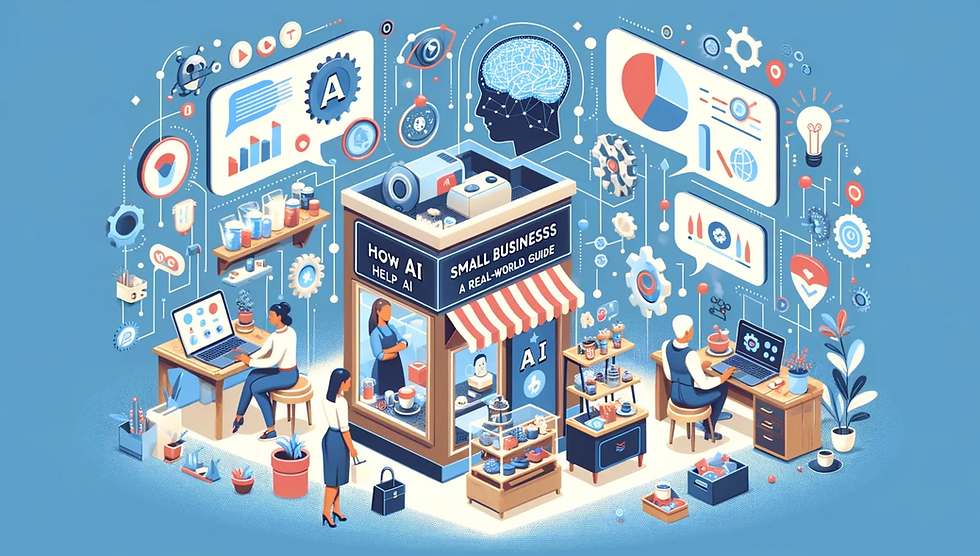
Artificial intelligence is no longer reserved for large enterprises with massive budgets. Today, small and medium-sized businesses (SMBs) are leveraging AI to streamline operations, enhance customer experiences, and unlock new growth opportunities.
The difference between businesses that succeed with AI and those that struggle isn’t access to technology—it’s how strategically it’s implemented.
This article explores real-world AI success stories and what they reveal about how SMBs can successfully integrate AI into their operations.
Why AI Integration Matters for SMBs
For SMBs, resources are limited. Every decision must drive measurable impact.
AI offers three critical advantages:
Operational efficiency through automation
Improved decision-making with data insights
Scalable growth without proportional cost increases
Businesses that adopt AI early position themselves ahead of competitors still relying on manual processes.

Success Story 1: Retail Business Increases Revenue with Predictive AI
A mid-sized eCommerce retailer struggled with overstocking and missed sales opportunities.
The Solution:
They implemented AI-powered predictive analytics to forecast demand, optimize inventory, and personalize product recommendations.
The Results:
28% increase in revenue
35% reduction in excess inventory
Improved customer satisfaction through personalization
Key Takeaway:
AI allows SMB retailers to compete with larger brands by using data more intelligently.
Success Story 2: Service Business Automates Client Communication
A growing service-based company faced delays in responding to customer inquiries, leading to lost leads.
The Solution:
They integrated AI chatbots and automated email workflows to handle inquiries, booking, and follow-ups.
The Results:
60% faster response times
40% increase in lead conversion
Reduced administrative workload
Key Takeaway:
AI-driven automation enhances responsiveness without increasing headcount.

Success Story 3: Healthcare Practice Improves Operational Efficiency
A small healthcare practice struggled with scheduling inefficiencies and administrative bottlenecks.
The Solution:
They implemented AI tools for appointment scheduling, patient reminders, and workflow optimization.
The Results:
25% reduction in no-shows
30% improvement in staff efficiency
Better patient experience
Key Takeaway:
AI can significantly improve both operations and customer experience in service-heavy industries.

Success Story 4: Marketing Agency Scales Content Production
A boutique marketing agency needed to produce more content without increasing costs.
The Solution:
They integrated AI tools for content generation, SEO optimization, and campaign analysis.
The Results:
3x increase in content output
Faster campaign turnaround
Higher client retention
Key Takeaway:
AI enhances creativity and productivity rather than replacing it.
Common Patterns Behind Successful AI Integration
Across all industries, successful AI adoption follows similar principles:
1. Start with a Clear Use Case
Businesses that succeed don’t adopt AI broadly—they solve specific problems first.
2. Focus on ROI
Every implementation is tied to measurable outcomes: revenue, efficiency, or cost savings.
3. Integrate, Don’t Replace
AI works best when integrated into existing workflows rather than disrupting them entirely.
4. Iterate and Scale
Successful SMBs start small, refine their approach, and expand AI usage over time.
How Your Business Can Start Integrating AI
If you’re considering AI for your business, start with these steps:
Identify repetitive or time-consuming tasks
Evaluate where data is underutilized
Implement one focused AI solution
Measure results and optimize
Scale strategically

The Competitive Advantage of Early AI Adoption
Businesses that integrate AI early gain a significant edge:
Faster decision-making
Lower operational costs
Stronger customer experiences
Increased scalability
Those who delay risk falling behind competitors who are already leveraging AI to operate more efficiently.
Final Thoughts
AI is no longer a future concept—it’s a present-day competitive advantage.
For small and medium-sized businesses, the opportunity isn’t just to adopt AI, but to adopt it strategically.
The companies seeing the greatest success aren’t the ones using the most advanced tools—they’re the ones using AI with clarity, purpose, and precision.


Comments